
TruaceTracing the truth around AIMonday, September 14, 2026

Health

454 stories · page 3 of 31

Evidence-backed problem

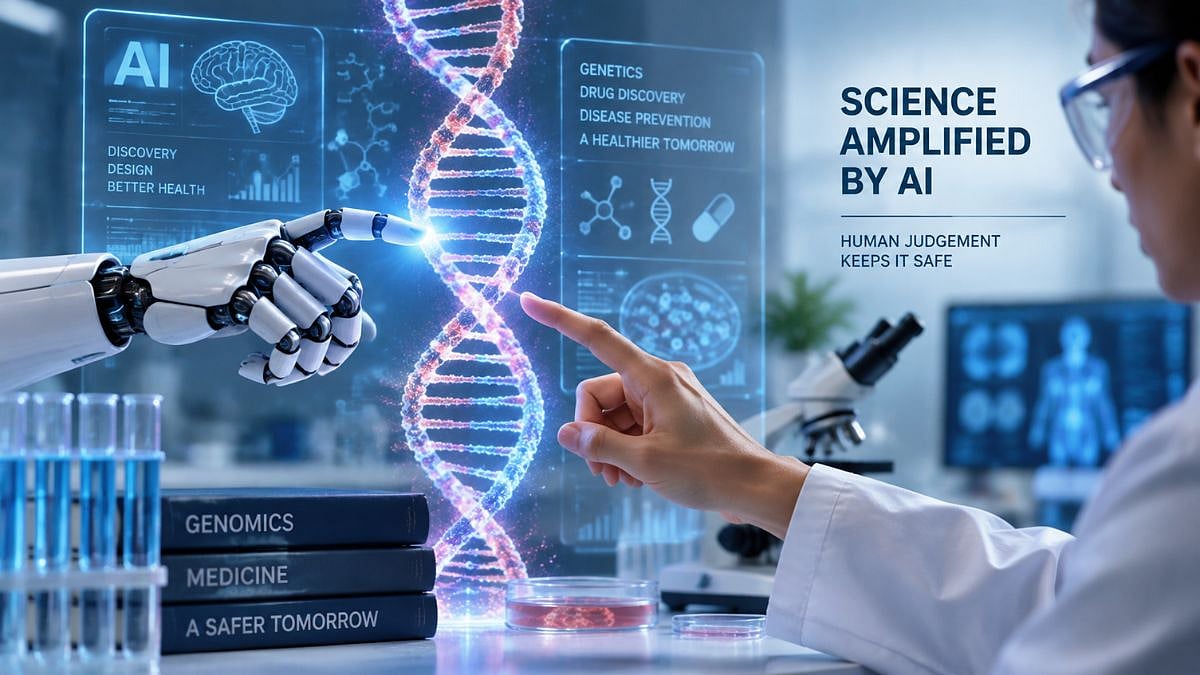
AI Is Rewriting Biology And Medicine, But Human Oversight Remains Crucial

AI is increasingly being used to design genetic instructions and analyse medical data, opening new possibilities in biology and healthcare. Researchers have created functioning virus designs using AI, while other systems can detect hidden signals in ECGs and identify patients at risk. Experts say human oversight remains essential as AI capabilities grow.
Free Press Journal · Health

AI Is Rewriting Biology And Medicine, But Human Oversight Remains Crucial
Machines that express emotions: from medical paternalism to machine paternalism?
Evidence-backed problem

Machines that express emotions: from medical paternalism to machine paternalism?

Abstract: Introduction: Machines do not have emotions, but they can be programmed to express (to appear to have) certain emotions. In medicine, robots and AI machines are used that could express positive emotions (joy, compassion, hope, gratitude, inspiration or awe) and priorities. Objective: To describe the main ethical implications of integrating the expression of emotions in machines used f...

Health
Causal adiposity and clinical validation of regional fat distribution in PMOS: a multi-modal analysis integrating GBD 2021, Mendelian randomization, and machine learning
Evidence-backed gain

Causal adiposity and clinical validation of regional fat distribution in PMOS: a multi-modal analysis integrating GBD 2021, Mendelian randomization, and machine learning

Background Polyendocrine metabolic ovarian syndrome (PMOS), previously named polycystic ovary syndrome (PCOS), is the most common endocrine disorder among women of reproductive age and a leading cause of anovulatory infertility. However, the evolving global burden of PMOS and the role of adiposity, particularly regional fat distribution, remain incompletely understood. We integrated global epidemiological analysis, genetic causal inference, and clinical prediction modeling to investigate the burden and adiposity…

Health
A protocol for validation of novel artificial intelligence-based framework for dyspnoea investigation with cardiopulmonary exercise testing
Evidence-backed gain

A protocol for validation of novel artificial intelligence-based framework for dyspnoea investigation with cardiopulmonary exercise testing

Background Exertional dyspnoea largely represents the sensory translation of an ever-growing dynamic mismatch between ventilatory demand and capacity as exercise intensifies. This fundamental tenet, however, has not been formally incorporated into data display and clinical interpretation of incremental cardiopulmonary exercise testing (CPET). The objectives of the present study were to validate a novel framework (Dynamic Assessment of Dyspnoea and Ventilation on Exercise (DyVe-X)) to quantify the severity of exe…

Health
Machine Learning for Autism Spectrum Disorder Prediction: A Review of Data Augmentation and Feature Selection Techniques
Both readings

Machine Learning for Autism Spectrum Disorder Prediction: A Review of Data Augmentation and Feature Selection Techniques

Autism spectrum disorder (ASD) is a complex neurodevelopmental condition characterized by persistent difficulties in social communication, social interaction, and repetitive behaviors. Early and accurate diagnosis is essential but is often hindered by subjective clinical assessments, limited data availability, and inconsistencies in existing diagnostic tools. This review evaluates the role of machine learning and deep learning approaches in improving ASD prediction, with a particular focus on two important yet r…

Health
Automated Diagnosis of Infantile Skull Fractures From X-Ray Images Using an Ensemble Deep Learning Model
Evidence-backed gain

Automated Diagnosis of Infantile Skull Fractures From X-Ray Images Using an Ensemble Deep Learning Model

Background To develop an artificial intelligence (AI)-assisted model for detecting skull fractures in neonates and infants using plain radiographs, enhancing diagnostic accuracy while minimizing radiation exposure. Methods A retrospective dataset of skull X-rays from 1,184 patients with head trauma (2010-2021) was collected. Images underwent preprocessing, including background removal, Gaussian blurring, binarization, and CLAHE-based contrast enhancement. Three convolutional neural network architectures (ResNet-…

Health
The AI arc and interpretive drift
Evidence-backed problem

The AI arc and interpretive drift

Artificial intelligence now enters the clinical encounter at three points: before the visit, during clinical reasoning, and after it, when ambient tools generate the note. AI has the potential to adversely influence the diagnostic process at each of these steps. This opinion piece names interpretive drift, the subtle shift in meaning that occurs as a patient's account moves through an AI-generated summary and into the medical record. It argues that reviewing AI-generated documentation is a diagnostic safety prac…

Health

Species-level identification of Nocardia spp. from clinical samples via intelligent analysis of Raman spectroscopic fingerprints

Background Nocardia spp. are clinically opportunistic pathogens that are frequently underdiagnosed. They often lead to severe clinical consequences. These infections are often invasive, involving the lungs, nervous system, skin, and soft tissues. Different Nocardia spp. show significant differences in virulence and antimicrobial susceptibility. However, clinical manifestations are highly diverse, and species-level identification remains technically difficult. The precise diagnosis of Nocardia spp. is challenging…

Health
Species-level identification of Nocardia spp. from clinical samples via intelligent analysis of Raman spectroscopic fingerprints

A Multiparametric Approach Integrating Multimodal Ultrasound and Serum TPO-Ab for Differentiating Thyroid Carcinoma in Hashimoto's Thyroiditis: A Comparative Diagnostic Study with Internal Validation

Objectives To evaluate whether a multiparametric approach combining grayscale ultrasound (2D-US), contrast-enhanced ultrasound (CEUS), and serum anti-thyroid peroxidase antibody (TPO-Ab) improves the differentiation of benign from malignant thyroid nodules (TNs) in patients with Hashimoto's thyroiditis (HT) and to assess the stability of the combined diagnostic model through internal validation. Methods This retrospective study enrolled 600 HT patients with 650 pathologically confirmed TNs. All patients underwen…

Health
A Multiparametric Approach Integrating Multimodal Ultrasound and Serum TPO-Ab for Differentiating Thyroid Carcinoma in Hashimoto's Thyroiditis: A Comparative Diagnostic Study with Internal Validation

An integrative clinical-molecular model as an auxiliary predictive tool for glioma malignancy grade

Objective An integrative auxiliary predictive model incorporating clinical parameters, serum biomarkers, and molecular pathological markers was developed to assess glioma malignancy grade. Methods This single-center retrospective observational study consecutively enrolled 400 glioma patients. A total of 26 variables, including demographic characteristics, clinical parameters, laboratory indicators, and serum biomarkers, were analyzed. Predictors were selected using univariate analysis, followed by Least Absolute…

Health
An integrative clinical-molecular model as an auxiliary predictive tool for glioma malignancy grade

Artificial intelligence-based neonatal heart rate monitoring technologies: Systematic review

Background Neonatal heart rate (HR) is an important parameter in the evaluation of newborn health and viability in the immediate postnatal period. Aim To evaluate the accuracy, reliability, and clinical applicability of emerging non-contact and artificial intelligence (AI)-assisted HR monitoring technologies in neonates compared to conventional electrocardiography (ECG)-based systems. Methods A comprehensive literature search was conducted across PubMed, EMBASE, Google Scholar, and Cochrane databases from Januar…

Health
Artificial intelligence-based neonatal heart rate monitoring technologies: Systematic review

Artificial intelligence for early sepsis detection and dynamic prognostication in onco-critical care

Critically ill cancer patients have a unique physiological profile marked by severe immunosuppression, frailty, and multimorbidity, making traditional tools like Acute Physiology and Chronic Health Evaluation II or Sequential Organ Failure Assessment often inadequate for accurate risk assessment. This review explores artificial intelligence's potential to transform onco-critical care from reactive to predictive management. We will synthesize literature on two key applications: Early sepsis detection in criticall…

Health
Artificial intelligence for early sepsis detection and dynamic prognostication in onco-critical care

Physiology-guided mechanical ventilation: Monitoring, proportional assist, and bounded automation

Mechanical ventilation has evolved into a complex intervention that influences lung injuries, respiratory muscle function, and hemodynamic stability. Although lung-protective strategies improve outcomes in acute respiratory distress syndrome, bedside management remains limited by incomplete monitoring of key physiologic variables, including lung stress, inspiratory effort and regional ventilation. This constrains decision such as positive end-expiratory pressure titration and ventilatory assist targeting. Emergi…

Health
Physiology-guided mechanical ventilation: Monitoring, proportional assist, and bounded automation

AI will help find cure for cancer ‘within our lifetimes’, says Arm Holdings chief

The boss of one of the UK’s biggest chip companies has claimed AI will be able to find a cure for cancer “in our lifetime”. Rene Haas, chief executive of the chip designer Arm Holdings, said that, while modelling how a DNA marker is affected by cancer was currently “too complex” a problem for either humans or technology, computers were “going to solve it” in the future. Haas told the BBC: “AI is going to … find a cure for cancer that today you and I, other humans [could] not in our lifetimes. I believe in our li…

Health
AI will help find cure for cancer ‘within our lifetimes’, says Arm Holdings chief

Select large language models outperform hip preservation experts on consensus-based hip preservation questionnaire

Artificial intelligence (AI) is increasingly utilized in medical education and clinical contexts, yet few studies compare the performance of large language models (LLMs) to subspecialized experts in providing guideline-based medical information on hip preservation. The purpose of this study was to evaluate the performance of three LLMs compared to a panel of international hip preservation experts in answering guideline-based questions related to femoroacetabular impingement syndrome, hip dysplasia and microinsta…

Health
Select large language models outperform hip preservation experts on consensus-based hip preservation questionnaire