TruaceTracing the truth around AIMonday, September 14, 2026

Health

454 stories · page 27 of 31

Evidence-backed gain

A CT-based deep learning model for the automated risk stratification of refractory Mycoplasma pneumoniae pneumonia in children

The accurate identification of children with refractory Mycoplasma pneumoniae pneumonia (RMPP) remains challenging. This study aimed to develop a transformer-based model utilizing clinically indicated chest computed tomography (CT) to stratify pediatric RMPP risk at a critical decision point. Non-contrast chest CT data from a multicenter retrospective cohort of 1224 pediatric patients with Mycoplasma pneumoniae pneumonia who underwent clinically indicated CT were used to develop a transformer-based deep learning…

BMC Medical Imaging · Health

A CT-based deep learning model for the automated risk stratification of refractory Mycoplasma pneumoniae pneumonia in children
Bias in medical AI: Implications for clinical decision-making
Evidence-backed problem

Bias in medical AI: Implications for clinical decision-making

Biases in medical artificial intelligence (AI) arise and compound throughout the AI lifecycle. These biases can have significant clinical consequences, especially in applications that involve clinical decision-making. Left unaddressed, biased medical AI can lead to substandard clinical decisions and the perpetuation and exacerbation of longstanding healthcare disparities. We discuss potential biases that can arise at different stages in the AI development pipeline and how they can affect AI algorithms and clinic…

Health
Digital Twins’ Advancements and Applications in Healthcare, Towards Precision Medicine
Evidence-backed gain

Digital Twins’ Advancements and Applications in Healthcare, Towards Precision Medicine

This review examines the significant influence of Digital Twins (DTs) and their variant, Digital Human Twins (DHTs), on the healthcare field. DTs represent virtual replicas that encapsulate both medical and physiological characteristics-such as tissues, organs, and biokinetic data-of patients. These virtual models facilitate a deeper understanding of disease progression and enhance the customization and optimization of treatment plans by modeling complex interactions between genetic factors and environmental inf…

Health
Robustness in deep learning models for medical diagnostics: security and adversarial challenges towards robust AI applications
Both readings

Robustness in deep learning models for medical diagnostics: security and adversarial challenges towards robust AI applications

The current study investigates the robustness of deep learning models for accurate medical diagnosis systems with a specific focus on their ability to maintain performance in the presence of adversarial or noisy inputs. We examine factors that may influence model reliability, including model complexity, training data quality, and hyperparameters; we also examine security concerns related to adversarial attacks that aim to deceive models along with privacy attacks that seek to extract sensitive information. Resea…

Health
Revolutionizing Personalized Medicine: Synergy with Multi-Omics Data Generation, Main Hurdles, and Future Perspectives
Both readings

Revolutionizing Personalized Medicine: Synergy with Multi-Omics Data Generation, Main Hurdles, and Future Perspectives

The field of personalized medicine is undergoing a transformative shift through the integration of multi-omics data, which mainly encompasses genomics, transcriptomics, proteomics, and metabolomics. This synergy allows for a comprehensive understanding of individual health by analyzing genetic, molecular, and biochemical profiles. The generation and integration of multi-omics data enable more precise and tailored therapeutic strategies, improving the efficacy of treatments and reducing adverse effects. However,…

Health
Davinci xi: FDA injury report involving AI
Evidence-backed problem

Davinci xi: FDA injury report involving AI

The FDA received a injury report involving Davinci xi, made by Intuitive surgical, inc. A review of a clinical literature article titled "usefulness of artificial intelligence for surgical support in robot-assisted distal pancreatectomy: a preliminary case report" was conducted. the article reported an event involving a da vinci-assisted distal pancreatectomy where the dissection line on the lower margin of the pancreas was falsely recognized and pancreatic tissue was damaged. the estimated blood loss…

Health
Prediction of bronchopulmonary dysplasia seven days after birth using respiratory and oxygenation timeseries with machine learning
Evidence-backed gain

Prediction of bronchopulmonary dysplasia seven days after birth using respiratory and oxygenation timeseries with machine learning

Accurate prediction of bronchopulmonary dysplasia (BPD) development would allow targeted early treatment. This study aims to develop a machine learning (ML) model incorporating respiratory and oxygenation timeseries to predict BPD development within 1 week after birth. Data was collected retrospectively from a neonatal intensive care (2009-2015). Readily available clinical data and respiratory and oxygenation timeseries (mode of respiratory support, FiO2, SpO2) were gathered. Descriptive features were extracted…

Health

Clinical applications of artificial intelligence in hypertension management: current evidence and future perspectives

Hypertension remains the leading modifiable risk factor for cardiovascular morbidity and mortality worldwide, with persistently inadequate blood pressure control despite guideline-directed therapy. The rapid expansion of digital health data and computational capacity has positioned artificial intelligence (AI) as a promising tool for improving hypertension management through enhanced risk prediction, phenotyping, and individualized care. However, important challenges related to external validation, interpretabil…

Health
Clinical applications of artificial intelligence in hypertension management: current evidence and future perspectives

Artificial Intelligence in Ischemic Stroke Lesion Segmentation: A Narrative Review of Deep Learning Methods, Clinical Utility, and Future Directions

Ischemic stroke management is time-sensitive, and lesion segmentation supports treatment selection, prognostication, and reproducible quantification. Deep learning (DL) aims to accelerate and standardize lesion delineation to augment neuroimaging workflows. We conducted a narrative review of DL-based ischemic stroke lesion segmentation studies published from 2020 to 2025. PubMed, Google Scholar, Scopus, and IEEE Xplore were searched; ~ 500 records were identified, and 40 full-text studies were included after scr…

Health
Artificial Intelligence in Ischemic Stroke Lesion Segmentation: A Narrative Review of Deep Learning Methods, Clinical Utility, and Future Directions

Explainable machine learning for early prediction and anatomical classification of pulmonary embolism in the emergency department

Pulmonary thromboembolism (PTE) is a life‑threatening condition that requires prompt and accurate evaluation in the emergency department (ED). Standardized clinical scoring systems, including the Wells and revised Geneva scores, form the cornerstone of initial risk stratification but have limited specificity, leading to unnecessary D‑dimer testing and frequent overuse of CT pulmonary angiography (CTPA). This study aimed to develop explainable machine‑learning (XML) models as a complementary decision‑support laye…

Health
Explainable machine learning for early prediction and anatomical classification of pulmonary embolism in the emergency department

The VISION-AI Trial: protocol for a pragmatic randomized controlled non-inferiority trial comparing artificial intelligence-guided colonoscopy to pancolonic chromoendoscopy for neoplasia detection in adults with colorectal inflammatory bowel disease

Current guidelines recommend pancolonic chromoendoscopy (pCE) over white light endoscopy (WLE) alone for colorectal neoplasia (CRN) detection in individuals with inflammatory bowel diseases (IBD). However, these techniques are poorly adopted due to technical and logistical limitations. Artificial intelligence-based computer-aided detection (CADe) is a promising new technology integrated into modern endoscopy platforms that has been shown to increase CRN detection in the non-IBD population. We aim to compare CADe…

Health
The VISION-AI Trial: protocol for a pragmatic randomized controlled non-inferiority trial comparing artificial intelligence-guided colonoscopy to pancolonic chromoendoscopy for neoplasia detection in adults with colorectal inflammatory bowel disease

Comparison of artificial intelligence-based chatbots and expert periodontists in responding to patient questions: a multi-dimensional analysis

Large Language Model (LLM) -based chatbots are increasingly used in patient information processes. The aim of this study was to compare the performance of ChatGPT (GPT-5.1), Gemini (2.5 Flash), and Claude (Sonnet 4.5) with expert periodontologists in responding to periodontal questions. Responses were evaluated in terms of scientific accuracy, completeness, conciseness & focus, empathy, and clarity, and differences among groups were investigated. The question pool was developed de novo based on clinical experien…

Health
Comparison of artificial intelligence-based chatbots and expert periodontists in responding to patient questions: a multi-dimensional analysis

Plasma proteomics and machine learning deliver non-invasive distinction between fibrotic hypersensitivity pneumonitis and idiopathic pulmonary fibrosis

Hypersensitivity pneumonitis (HP) manifests as fibrotic (FHP) and non-fibrotic (NFHP) phenotypes. Clinically distinguishing FHP from idiopathic pulmonary fibrosis (IPF) remains challenging owing to phenotypic overlap, despite divergent management protocols. This investigation sought to develop a plasma proteomics-based framework for differential diagnosis between these entities. A total of 119 subjects were enrolled from the Chinese Interstitial Lung Disease (ILD) National Cohort and the PORTRAY IPF Cohort betwe…

Health
Plasma proteomics and machine learning deliver non-invasive distinction between fibrotic hypersensitivity pneumonitis and idiopathic pulmonary fibrosis

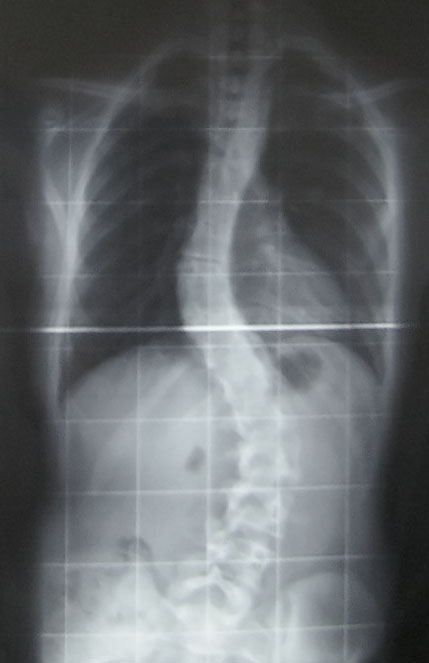
Predicting postoperative coronal imbalance in Lenke 1/2 adolescent idiopathic scoliosis: A machine learning model with clinical interpretability

Selective posterior thoracic fusion (sPTF) for Lenke 1/2 adolescent idiopathic scoliosis (AIS) aims to reconcile multi-planar correction with motion preservation. Nevertheless, postoperative coronal imbalance (CIB) frequently compromises these objectives. This study developed an interpretable machine learning architecture to stratify CIB risk and identify key predictors. Data from 282 patients were analyzed. Following dual-stage dimensionality reduction (Boruta and LASSO) on 24 candidate predictors, ten machine…

Health
Predicting postoperative coronal imbalance in Lenke 1/2 adolescent idiopathic scoliosis: A machine learning model with clinical interpretability

Comprehensive plant disease classification and severity estimation for sustainable farming via automatic segmentation and multi-scale feature fusion

Detecting plant leaf diseases at an early stage is one of the most important requirements for sustainable agriculture, increasing crop productivity, and achieving the global Sustainable Development Goals (SDGs). However, accurately recognizing them in real-world farm fields can still be difficult due to factors such as background complexity, changes in light conditions, and very similar looking classes from a visual standpoint. In order to solve these problems, the authors here present a new Multi-Scale Feature…

Health
Comprehensive plant disease classification and severity estimation for sustainable farming via automatic segmentation and multi-scale feature fusion